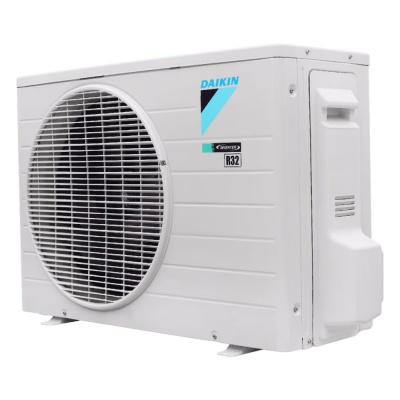
The cleanliness of the external condenser coil is all too frequently neglected when considering the performance of an air conditioning system.
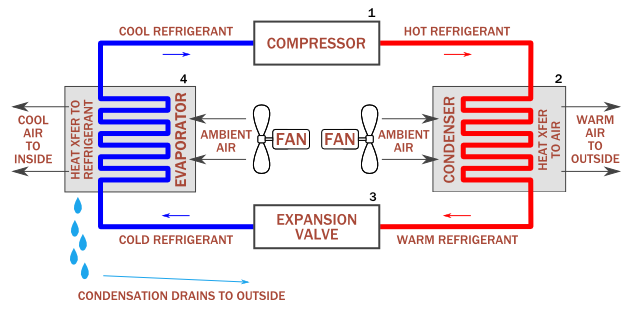
Without going in to great detail about thermodynamics and how the condenser unit works, essentially the job of the external condenser unit is to disperse latent heat into the atmosphere.
When the coils of an external condenser unit are laden with mold, dust, and other contaminants, it’s ability to transfer latent heat to the atmosphere is significantly reduced – the results of this are reduced overall performance of the AC system, less cool air, and increased energy consumption.
Furthermore, as the entire system has to work much harder to supply cool air, excessively dirty condenser coils can shorten the lifespan of various components of the condenser unit such as the fan motor and compressor.
With Hong Kong being one of the ‘world’s most vertical cities’, it comes as little surprise that external condenser units are neglected – more often than not, scaffolding is required to access external condenser units for cleaning. However, if your external condenser units are accessible (for example, from a nearby window), then it’s certainly a worthwhile investment to have them cleaned whenever significant amounts of contaminants have accumulated on the coil. Clients often inquire of us “How often should I clean the external condenser unit?” and whilst it would be easy to simply say “Once every 2 to 3 years is usually sufficient” the reality is that the frequency of cleaning is dependent upon a plethora of environmental factors. So it’s best to visually inspect the condenser coil to establish whether or not it is due for cleaning. The condenser unit in the video needs to be cleaned every 6 months or so – this client resides on the 1/F adjacent to a busy street, and there’s also a restaurant downstairs from their apartment…so their condenser units are constantly exposed to excessive levels of dust and other contaminants.
A significant proportion of Hong Kong’s (particularly HK Island) residential developments and commercial developments are situated on or near coastal areas. It is very important to note the impact of coastal corrosion on air conditioning systems – in particular the external condenser units. Accelerated metal degradation of the heat exchanger as a result of salt-induced corrosion is inevitable, however, a high frequency of self-administered preventative maintenance can ensure that the external condenser units can attain maximum life expectancy. For boats, marinas, and/or seafront properties, AirCare Solutions strongly recommends the installation of systems to automate this self-administered preventative maintenance – this simple and cost-effective solution has saved our clients tens of thousands of dollars, not only by ensuring the longevity of AC systems, but also by ensuring that the systems are as energy efficient as they can be.
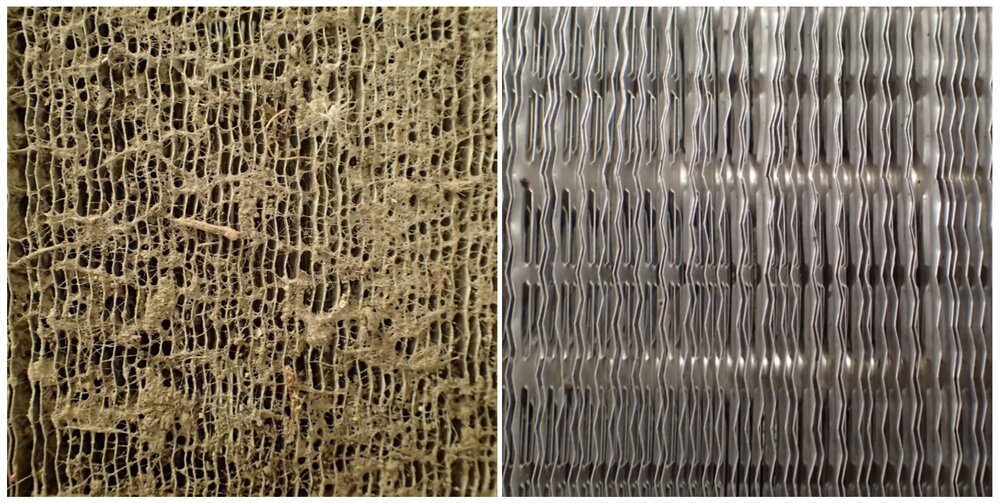
The image below provides an insight into what you should be looking for when visually inspecting the condition of the condenser coil – if there’s heavy levels of dust, mold, grime, or other contaminants, such as the image on the left, then the condenser coil is in need of cleaning
The image below provides a simplistic overview of an air conditioning system – the cleanliness of both the indoor unit and the outdoor unit are critical for the AC system to operate at maximum efficiency